
SLAWN’S LATEST ART EXHIBITION FEELS LIKE IT WAS CREATED WITH WITS
Physical Artworks & Conceptual IP Ownership → Repeatable Asset Revenue

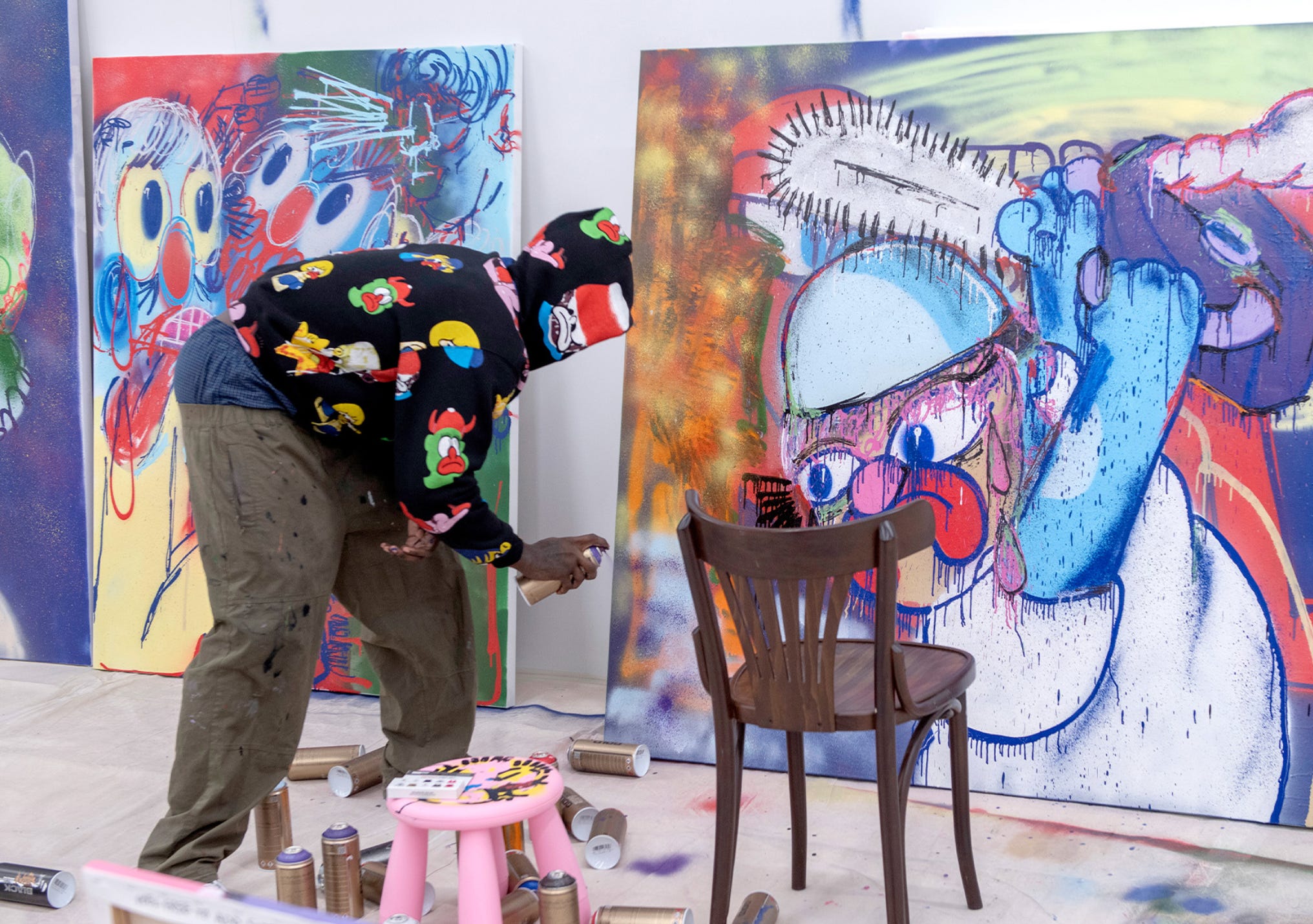
What happened inside Slawn’s exhibition at Saatchi Yates is better understood as a shift in how art, space, and ownership are being fused into a single economic object rather than a traditional gallery show.
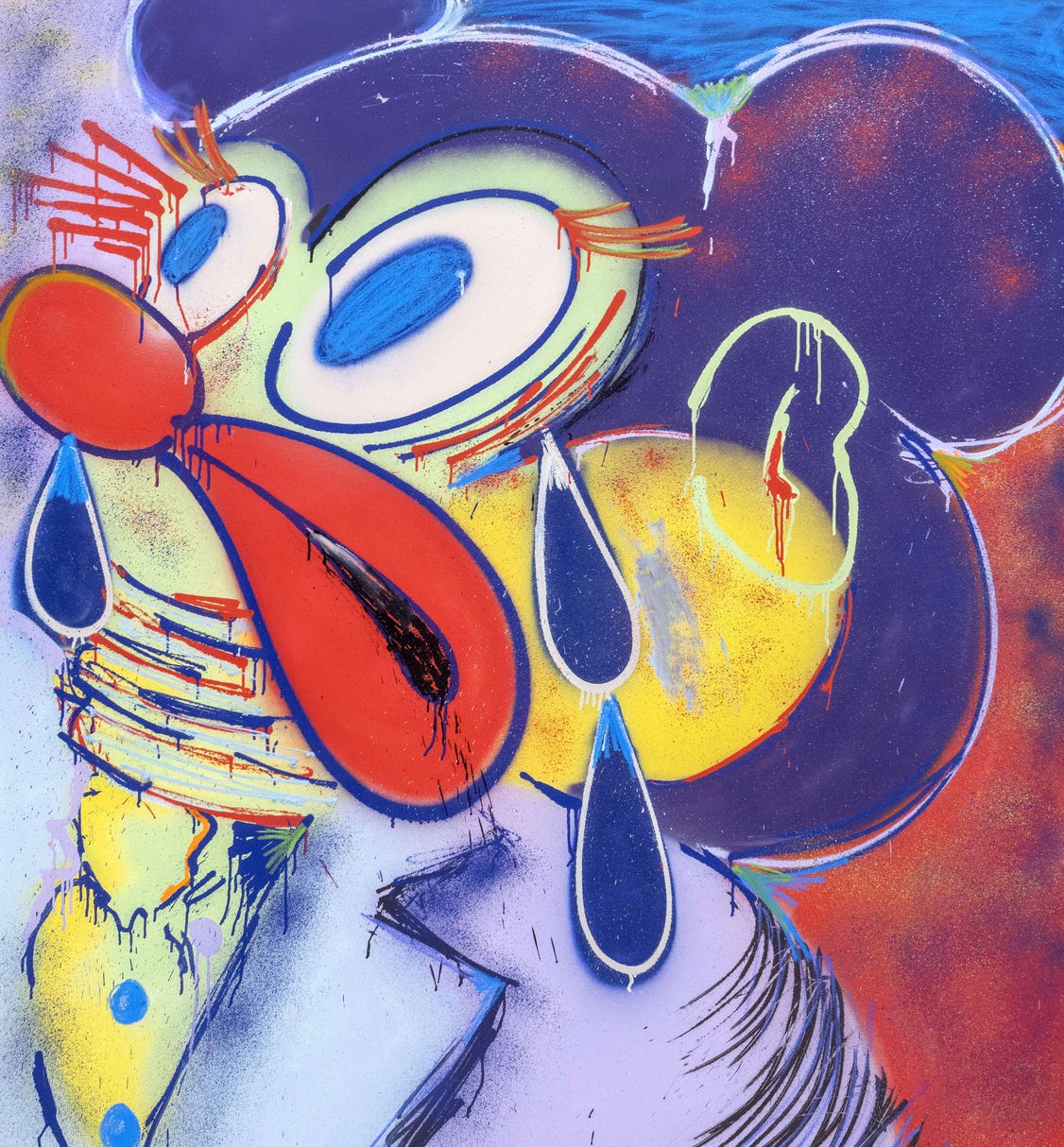
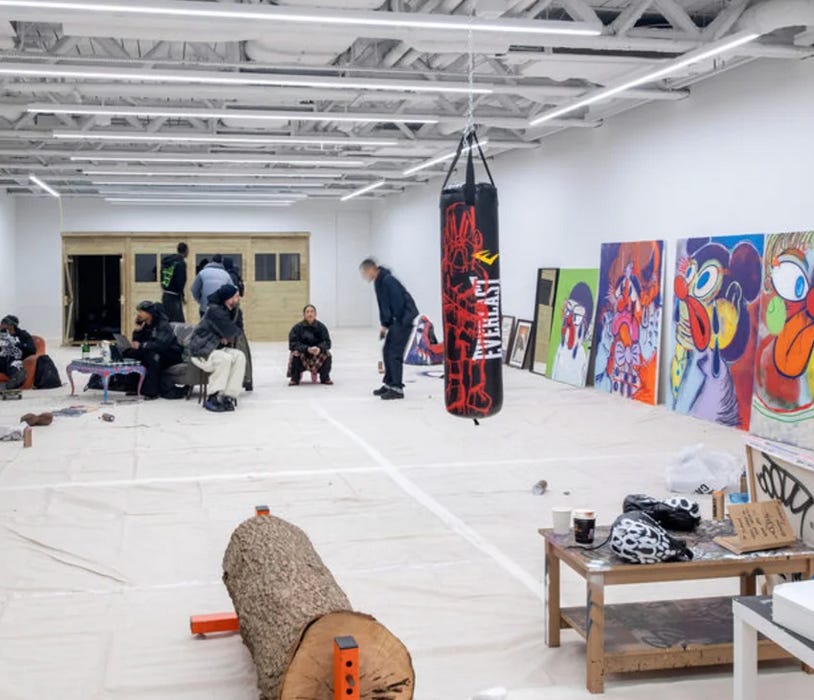
It is not just an exhibition that contains artworks. It is an environment that produces them, documents them, and sells them while it is still active.
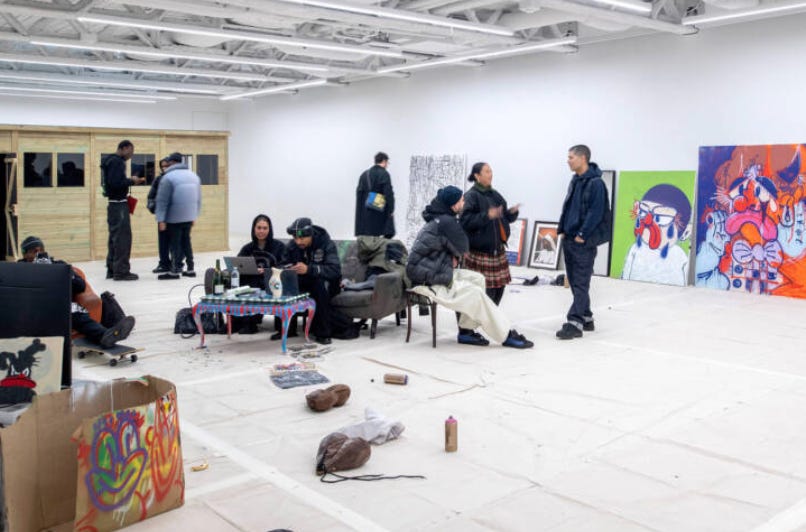
At its core, the project turns the gallery into a functioning creative environment where painting, music recording, installation building, and visitor experience all occur at the same time. The important change is not aesthetic. It is structural. The work is no longer only what hangs on the wall at the end. The work is also everything happening while the system is running.
Inside this environment, Slawn created and modified physical canvases in real time while collaborators moved through the space contributing to sound and atmosphere. One of the most significant outputs was a full album titled Not an Artist, recorded entirely within the gallery during the residency period. This means the exhibition produced both visual artworks and a complete musical body of work from the same physical conditions.
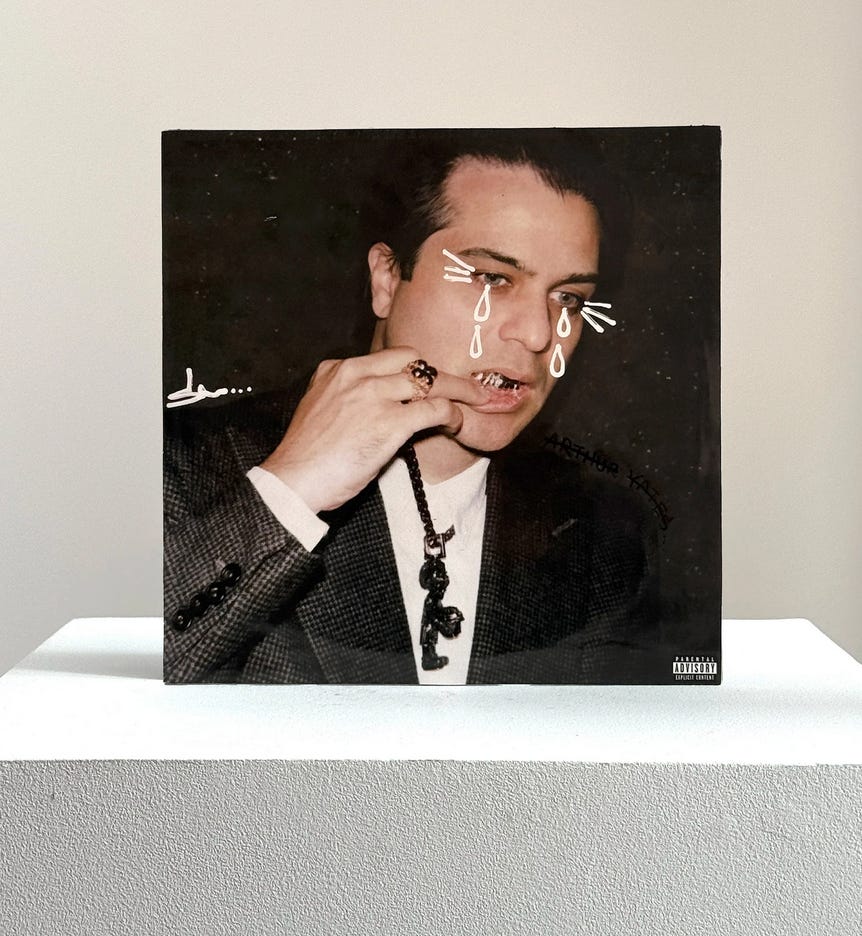
That combination alone already places it closer to a production engine than a traditional show.
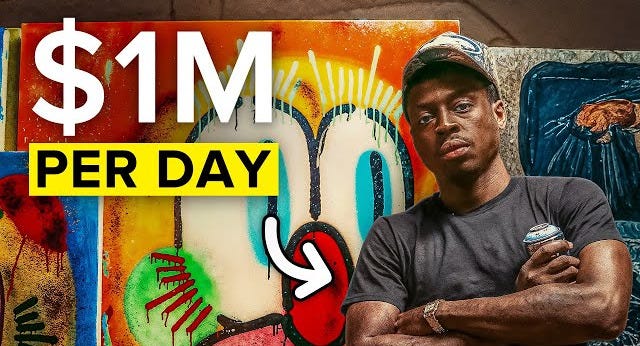
The financial context makes the shift even clearer. Slawn’s standalone physical canvases have previously sold in a range between 20,000 dollars and 45,000 dollars. That already positions his work in a strong mid to high emerging contemporary market bracket. What changes inside this format is that those canvases are no longer the only monetizable outputs. They become one layer inside a larger system that includes environment, process, participation, documentation, and conceptual ownership.
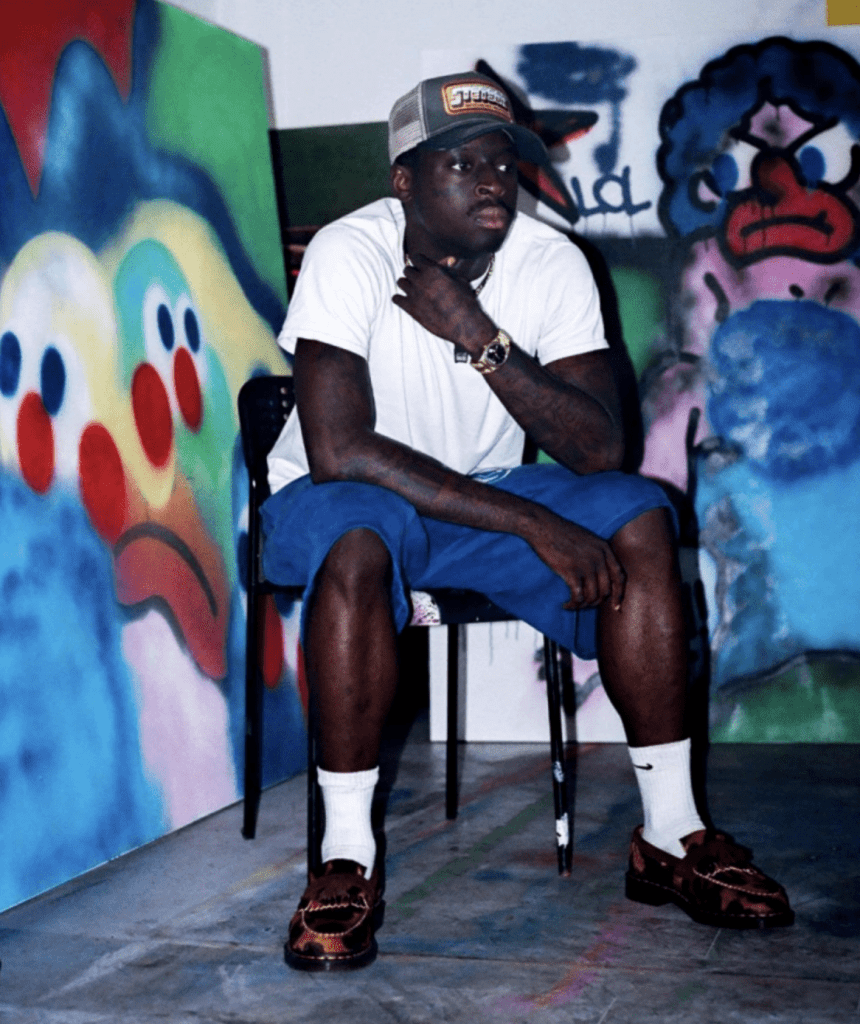
The most misunderstood aspect of this exhibition is what is actually being sold. It is not correct to say the gallery itself is sold as property. The physical building remains under the control of the institution. What is sold instead is a combination of physical works created inside the space, rights connected to the conceptual framing of the installation, and in some cases financial participation structures tied to outputs generated during the residency. In simpler terms, buyers are not purchasing real estate. They are purchasing fragments of a controlled creative environment and the works produced inside it.
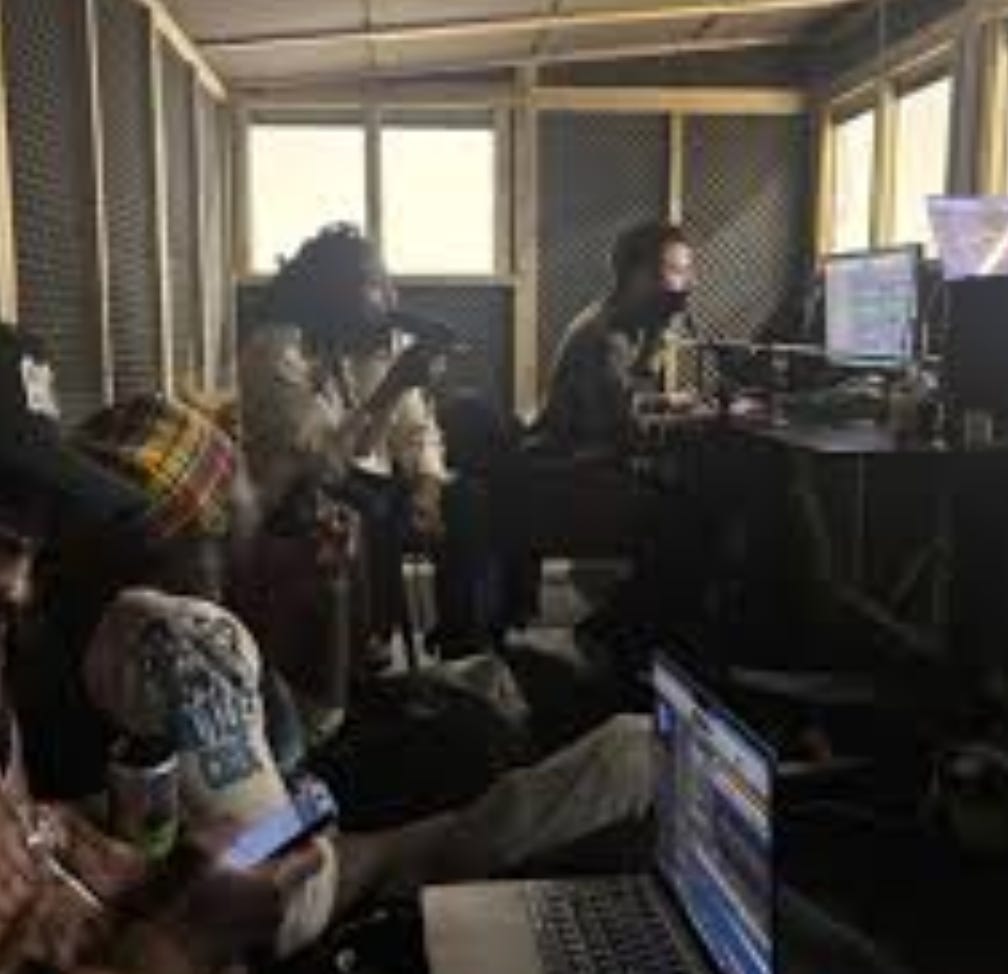
The concept extends further. The studio environment itself is treated as a single unified artwork. This means the skate ramp structures, recording equipment, installed canvases, and transformed interior are not separate props. They are part of one continuous piece that only exists during the life of the exhibition. Once the show ends, what remains are either sold components or documented traces of the event.
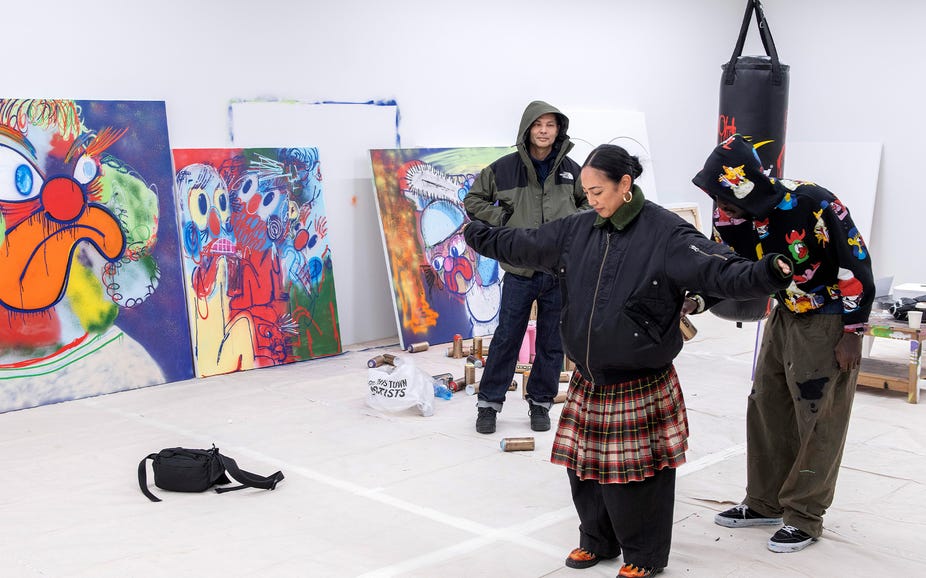
There is also a deeper layer involving perception and ownership. Because the album, the artworks, and the installation all emerge from the same space, the exhibition begins to operate like a closed creative system. Visitors are not only observers. They become part of the production atmosphere that gives value to what is being created. Attention itself becomes part of the asset.
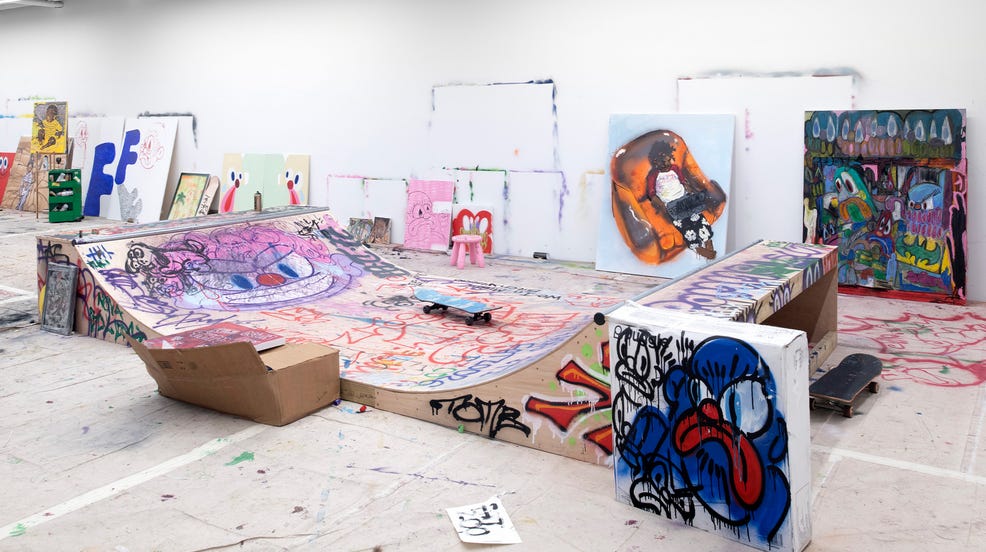
This is where the model becomes culturally important. It collapses the distance between studio and marketplace. In traditional systems, value is assigned after production is complete. Here, value begins forming while production is still happening. That shift turns time into a financial factor. The longer the system runs with attention, the more cultural and commercial weight it accumulates.
However, the structure still leaves significant value on the table when viewed through a more aggressive system like WITS. The current model concentrates most of the economic outcome into final artworks, conceptual framing, and selective participation. A WITS driven approach would expand this into a continuous monetization architecture rather than a sequence of discrete sales.
For example, instead of treating the exhibition as a finished environment that produces sellable pieces, WITS would treat every moment inside the space as a potential transaction point. Every recorded interaction, every evolving canvas stage, every musical fragment, and every visitor driven reaction could be structured as its own monetizable unit. This would transform attention from background context into a direct revenue layer.
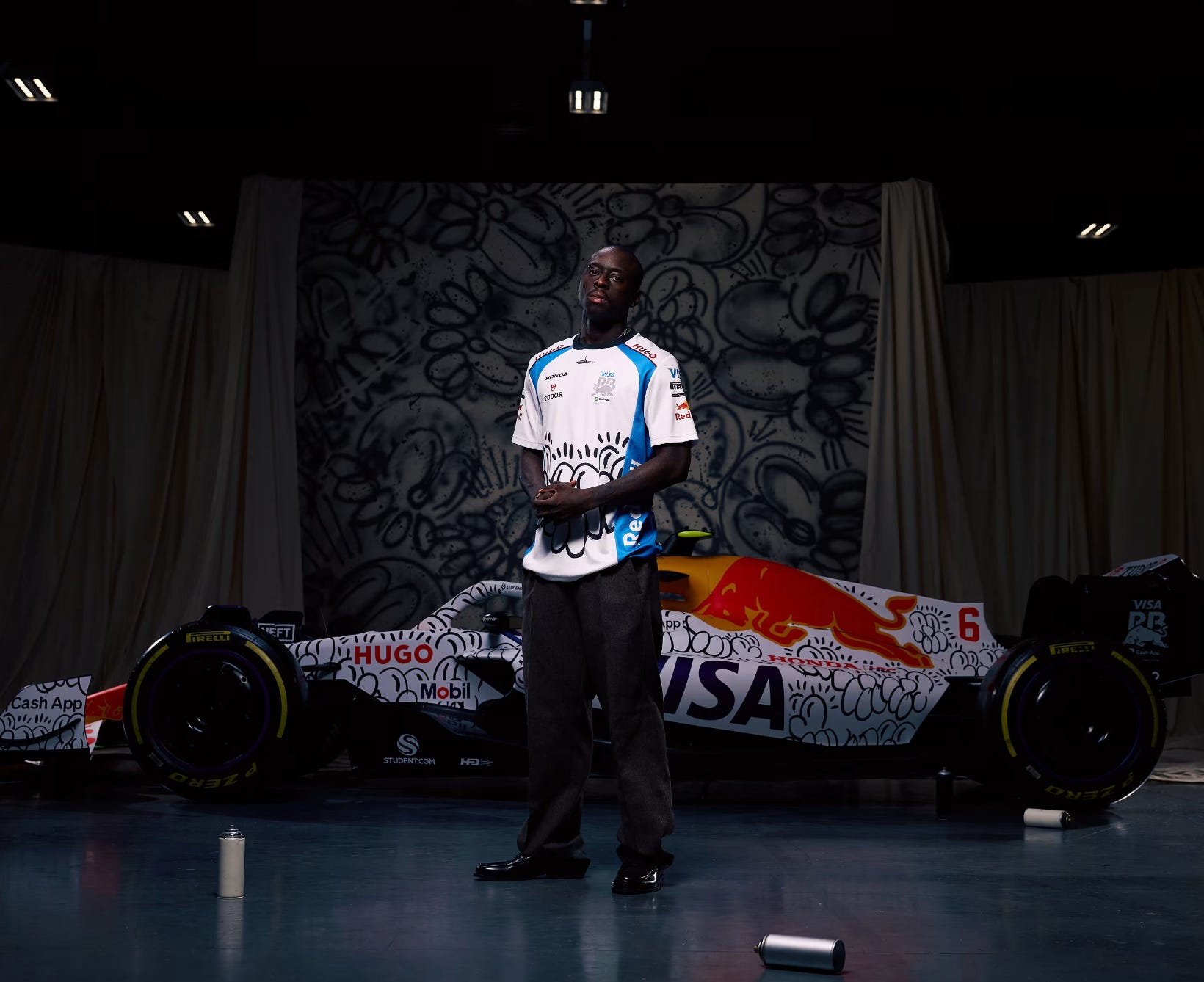
Another missed opportunity is fragmentation of ownership. In the current structure, buyers typically acquire either physical works or broader conceptual rights tied to the installation. A WITS approach would break this further into layered ownership streams. One collector might own early stage versions of a canvas. Another might own distribution rights to media created inside the space. Another might hold revenue participation in downstream licensing of the album or visual documentation. Instead of one sale per object, the system becomes a network of interconnected micro assets.
There is also the question of participation hierarchy. The exhibition already invites presence, but it does not fully monetize different levels of engagement. A more advanced system would define structured tiers where simple entry, interactive participation, and strategic stakeholder positioning each carry different economic roles. That would turn the audience from a general public into a structured part of the production economy.

The reason this matters is not only because of Slawn. It is because this format signals a broader change in how cultural value is being engineered.
The gallery is no longer just a place where finished works are presented. It is becoming a temporary machine for generating culture in real time. Once that shift is accepted, the next step is no longer about better exhibitions. It is about better systems for controlling how those exhibitions generate ongoing value.
What Slawn demonstrated inside Saatchi Yates is that a studio can function as both artwork and factory at the same time. The remaining question for the next evolution is whether that factory is treated as a single event with multiple outputs, or as a continuously optimized system that produces layered revenue, layered ownership, and layered cultural memory long after the doors close.